
Viral AI Agents Trigger Global Hardware Fever
It began as a demonstration in closed developer communities on Reddit and X. By January 2026, OpenClaw — an autonomous AI agent system that solves tasks independently via the internet — had gathered over 106,000 GitHub stars in just 48 hours and reached 2 million weekly users, according to Trending Topics. This is a growth rate almost no open-source software has ever matched.
The consequences were immediate. Apple's Mac Mini M4 — a compact machine launched on November 8, 2024, at a starting price of $799 — has become the preferred choice for developers and enthusiasts who want to run local AI models without paying cloud subscriptions. According to TechRadar, global shortages of the Mac Mini M4, particularly models with 24 GB RAM and above, are already a reality, with delivery times of 2–6 weeks in Apple's US online store. Similar situations have been reported from Vietnam and other markets.
In Norway, Komplett reports that sales have multiplied, according to Digi.no. The product may sell out.
Why the Mac Mini?
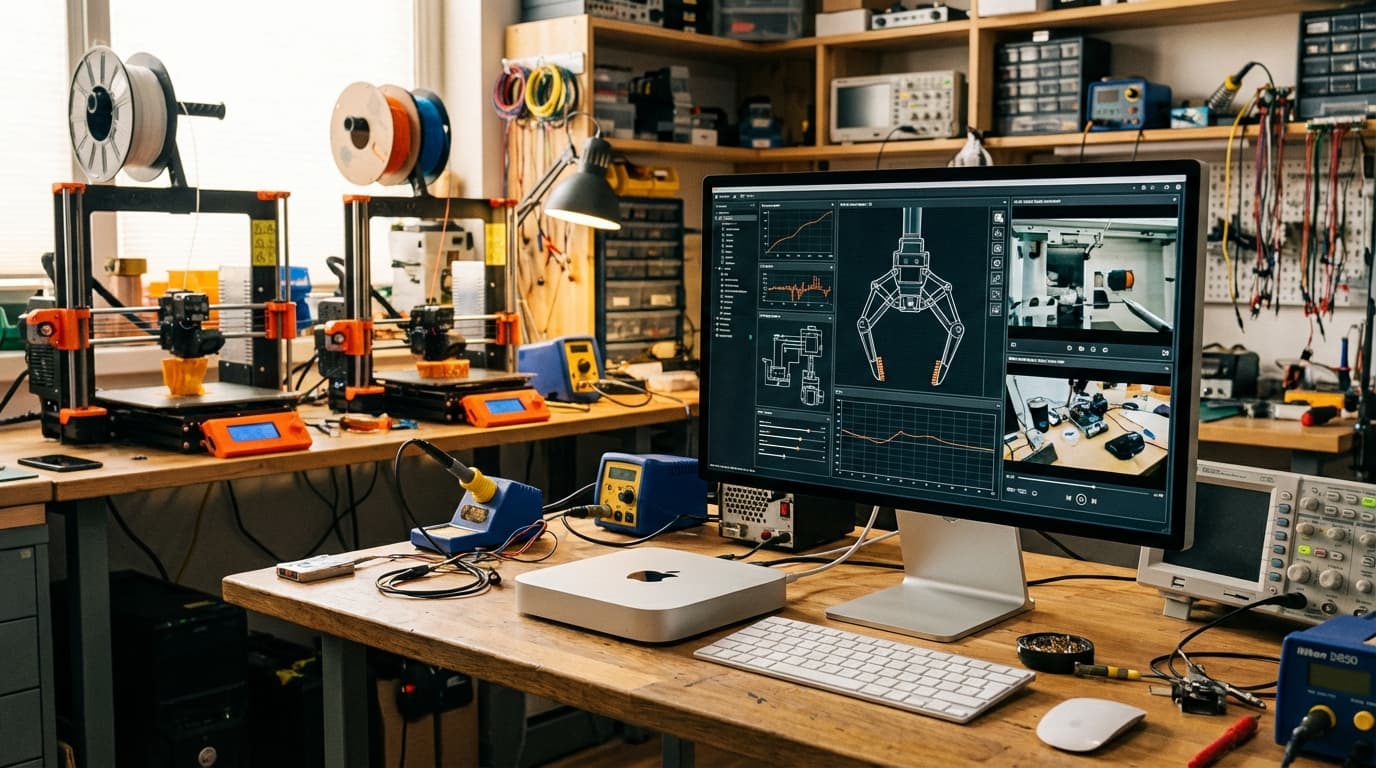
Mac Mini M4 is no accidental winner in this race. The machine packs a 10-core M4 processor, 10-core GPU, and a 16-core Neural Engine into a chassis measuring only 13×13×5 centimeters, with a typical power consumption of around 75 watts. This makes it an energy-efficient alternative for 24/7 operation compared to dedicated GPU rigs.
In comparison, an RTX 4090 setup alone costs around 1,800 euros, plus electricity, according to analyses from local AI distribution guides. A VPS with a dedicated GPU costs around 159 euros per month at service providers like Hetzner. The $799 Mac Mini, which can run models like Llama 3-Instruct 8B and Mistral Small 3 (24B) with good performance, appears as a very competitive entry point.
For local AI models, developer communities recommend tools like Ollama, LM Studio, and GPT4All to run models like DeepSeek-Coder 6.7B, Phi-3 Mini, and Llama 3, all optimized for Apple's unified memory architecture, according to dev.to and apxml.com.
Many Competitors — But None Match the Package
The Mac Mini is not without alternatives. Raspberry Pi 5 with 8 GB RAM costs around $150 total and is ideal for lighter AI experiments, but struggles with models over 7 billion parameters. Intel NUC 13 Pro offers upgradeable RAM and solid performance for $600–800, while AMD Ryzen-based mini-PCs like Beelink SER8 provide higher raw performance at a lower price — but are noisy and less energy-efficient.
For self-driven agent operation without a subscription, user communities point to the Mac Mini M4 as "the smartest buy" for quiet, efficient home lab operation in 2026, according to analyses from blog.patshead.com. A potential M5 Mac Mini is expected to provide only about a 15 percent performance improvement, according to MacRumors, making the current model a safe choice.

Security Experts Sound the Alarm
Behind the enthusiasm hides a darker picture. In January 2026, Kaspersky identified a total of 512 vulnerabilities in OpenClaw, 8 of which were classified as critical. Cisco researcher Amy Chang characterized the system as a "security nightmare," warning that "giving an AI agent unlimited access is a recipe for disaster."
The problem is structural: OpenClaw and similar agents process emails, files, and system commands — thereby ingesting untrusted external content. This opens the door for prompt injection attacks, where malicious instructions hidden in a document or email can force the agent to perform unauthorized actions. Security firm Mitiga Labs demonstrated how malicious "skills" — local extension packages for OpenClaw — can exfiltrate entire codebases to external servers via simple curl commands, almost without user interaction.
In skill catalogs like skills.sh, with over 200,000 downloads, the supply chain is vulnerable to manipulated packages that build up artificial reputations for mass distribution, according to Mitiga Labs and Tenable.
"Giving an AI agent unlimited access to systems and data is a recipe for disaster" — Amy Chang, Cisco
AI researcher Gary Marcus is even sharper in his judgment: he calls OpenClaw "a disaster waiting to happen." An Institutional Investor analysis dismisses the system as unsuitable for the financial sector due to a lack of audit trails.
NaNoClaw, created by software engineer Gavriel Cohen, is marketed as a "secure alternative" to OpenClaw and specifically addresses the architectural and security issues of the original project.
OpenAI Buys the Founder — Revealing What the Fight is Really About
The fact that OpenAI acquired OpenClaw creator Peter Steinberger in February 2026 says something significant about the direction of the AI industry. According to Fortune and InfoWorld, the acquisition signals that the competition is no longer primarily about which model is smartest, but about who controls the agent orchestration infrastructure — the framework that allows AI systems to act autonomously in the real world.
Competition is intensifying from several sides. Chinese models like Moonshot AI's Kimi K2.5 offer comparable performance at $0.58 per million input tokens — far below American alternatives. DeepSeek's V3 and R1 are known for competitive pricing combined with high performance, according to SCMP.
Norwegian Retailers: One Source, But a Global Pattern
It is worth emphasizing that Norwegian-specific documentation on the extent of the Mac Mini shortage is currently limited. Information about Komplett's multiplied sales stems primarily from Digi.no, and independent confirmations from Elkjøp, Power, or industry organizations like Virke are not available as of the time of publication. Direct inquiries to the mentioned retailers have not been answered.
The global pattern is nevertheless clearly documented: TechRadar confirms international shortages, and Apple CEO Tim Cook has mentioned capacity pressure in the supply chain during earnings calls. For Norwegian developers, designers, and smaller technology companies planning AI investments, the message is clear: those who wait risk longer delivery times and potentially higher prices.
The OpenClaw effect shows that a viral technology demonstration can empty physical store shelves faster than the supply chain can react.
A New Consumption Pattern Takes Shape
The OpenClaw fever is more than a temporary stock shortage. It illustrates a structural change in how tech enthusiasts and professional users relate to AI: from cloud-based subscriptions to local control, from passive use to active agent operation. The question of who owns the infrastructure — and who takes responsibility for security — remains unresolved.
For Norwegian IT retailers, the lesson is clear: following international AI trends is no longer enough. One must anticipate them — and stock the shelves before Reddit does it for you.